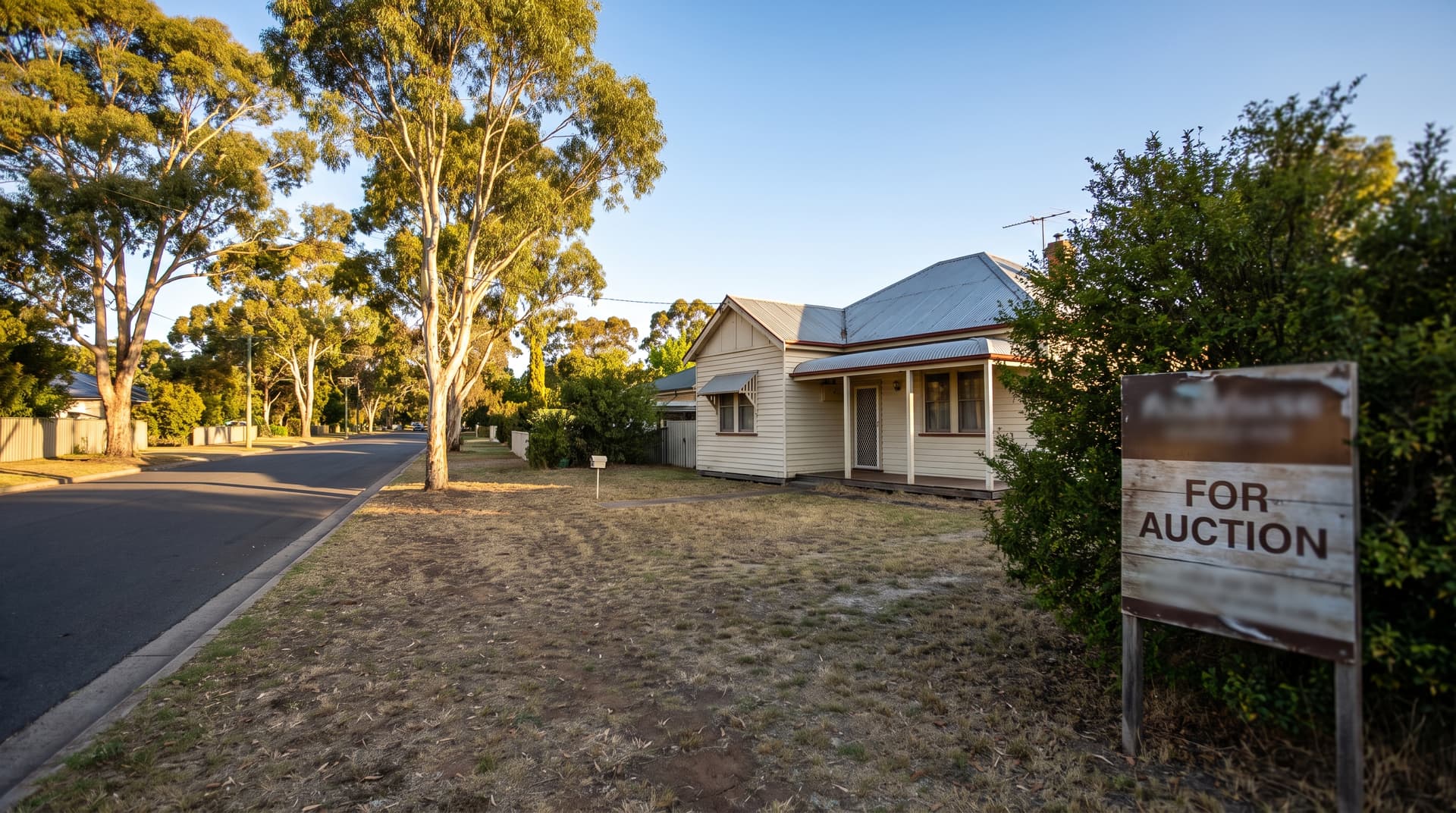
Australia’s national auction clearance rate dropped to 47.4% in the week ending 21 June 2026, the lowest figure since April 2020 at the start of the COVID pandemic. It stayed below 50% for three consecutive weeks after that.
More than half the homes taken to auction are failing to sell. That is a problem if you are a vendor. If you are a buyer, it is something else entirely.
What a clearance rate actually measures
A clearance rate is the share of properties sold at auction out of the total listed for auction that week. When it sits above 60%, sellers are getting results and the market favours vendors. When it drops below 50%, more auctions are failing than succeeding, and the balance tips toward buyers.
Cotality’s Tim Lawless put it plainly: “Clearance rates persistently holding this low shows a mismatch between buyer and seller expectations. It’s probably another indicator of the market going through a phase of negative movements.”
That mismatch is the useful part. Sellers are still pricing to 2024 conditions. Buyers are not meeting them there. The gap between what vendors expect and what buyers will pay is widening, and clearance rates are the clearest measure of that gap.
The last time auction clearance rates in Australia were this weak was April 2020, when the country was entering its first lockdown. The causes are completely different this time, but the buyer-side dynamics are similar: reduced competition, more stock, and vendors willing to negotiate.
The numbers city by city
The national average masks sharp differences between capitals. Here is how each city tracked across the two weakest reporting weeks:
| City | Week ending 21 June | Week ending 5 July | One year prior |
|---|---|---|---|
| Brisbane | 33.3% | 23.8% | 69.6% |
| Perth | 40.0% | n/a | 63-70% |
| Adelaide | 40.0% | 45.7% | 63-70% |
| Sydney | 47.4% | 51.6% | 63-70% |
| Canberra | 47.1% | 50.0% | 63-70% |
| Melbourne | 50.6% | 54.5% | 63-70% |
Brisbane’s collapse is the standout. From a market-leading 69.6% clearance rate a year ago to 23.8% in early July. That is not a softening. That is a market where three out of four auctions are failing.
Melbourne, despite being the city most associated with auction culture, held up relatively well at 54.5%. Sydney recovered slightly from its June low of 47.4% to 51.6% by early July, though both figures represent a significant decline from the 63-70% range recorded a year earlier across most capitals.
Three forces behind the crash in clearance rates
This is not a single-cause downturn. Three pressures are hitting at the same time.
Interest rates. The RBA held at 4.35% in June 2026 after three consecutive rate rises, and Governor Michele Bullock flagged that another rise remains on the table. Borrowing capacity has shrunk. Buyers who qualified for $900,000 eighteen months ago may now cap out at $800,000 or less.
Negative gearing and CGT changes. The 2026 federal budget proposed limiting negative gearing to new builds and overhauling the capital gains tax discount. The investor response was immediate. As Lawless noted, “investors have evaporated from the market.” June 2026 saw the biggest monthly fall in national housing values since 2022, directly following that budget announcement.
Rising listings. More properties are hitting the market at the same time buyer numbers are shrinking. Lawless described the effect: “We’re seeing advertised listing numbers rising which means there’s more supply in the marketplace and of course that means buyers have more choice. This takes urgency out of the market and gives them more ability to negotiate.”
For a deeper look at how these policy changes affect investment strategy, our guide to the 2026 CGT changes breaks down the specifics.
What this means for buyers: more stock, less competition, real leverage
The data points to concrete advantages for buyers willing to move now.
Withdrawn auctions signal motivated sellers. In the week ending 21 June, nearly 24% of scheduled auctions were withdrawn. A withdrawn auction typically means the vendor pulled the property because pre-auction interest was too weak. These sellers often accept private treaty offers below their original expectations. If you are buying at auction, tracking withdrawn properties can surface opportunities that never reach the hammer.
Pre-auction sales are up. Nearly 48% of properties sold before going under the hammer in that same week. Sellers are accepting early offers rather than risking a failed auction day. For buyers, this means putting in a strong offer before auction day can secure a property without competitive bidding.
The $1-2M bracket is the exception. Despite weak overall numbers, properties in the $1 to $2 million range are still seeing competition. Below and above that band, the negotiating dynamics are more favourable for buyers.
Prices have adjusted, but quality stock is still selling. As one agent observed, “Good quality properties, well renovated in good locations are still attracting demand, but prices have definitely adjusted.” The correction has not made good properties cheap, but it has removed the frantic overbidding that characterised 2023 and 2024.
What sellers need to know about timing
If you are considering selling, the data is less encouraging. Cotality economist Annabelle Mezieres expects “auction volumes and clearance rates to ease further over the coming weeks, partly a seasonal trend but also likely in response to weaker selling conditions.”
Lawless does not see factors that will reverse the downturn in the near term: “We’re in a housing market downturn and I don’t see any factors moving the market around.”
The core problem for sellers is the expectation gap. Vendors who price to current conditions rather than peak-market conditions are still achieving sales. Those who hold out for 2024 prices are watching their auctions fail or withdrawing before auction day. For context on whether this downturn deepens into something worse, our housing market correction guide covers the structural factors at play.
The window of opportunity, and when it closes
The Housing Industry Association has described the current market as a “window of opportunity” for buyers to enter while prices have moderated. That framing deserves scrutiny, but there is a structural case behind it.
This softness is driven by specific, identifiable forces: rate rises, policy changes, and sentiment. None of these are permanent. When rate certainty returns, or when the negative gearing changes are finalised and investors recalibrate, competition will increase again. The investor exodus is a response to policy uncertainty, not a permanent structural shift.
Buyers who understand what auction clearance rates actually measure can use the data as a timing signal rather than a fear signal. Sub-50% clearance rates mean the market is working in your favour. That will not last indefinitely.
If you want structured support navigating this kind of market, our property investment coaching walks you through suburb research, listing analysis, and negotiation strategy at a fixed fee, without the $15K-$30K cost of a traditional buyer’s agent.
FAQ
What is a good auction clearance rate in Australia?
A clearance rate above 60% generally indicates a seller’s market, where most properties find buyers at auction. Between 50% and 60% is balanced. Below 50%, conditions favour buyers, with more auctions failing than succeeding. As of mid-2026, the national rate has held below 50% for multiple consecutive weeks.
Why are auction clearance rates so low in 2026?
Three factors are converging: the RBA’s interest rate holds at 4.35% after three consecutive rises, the federal budget’s proposed changes to negative gearing and capital gains tax driving investors out of the market, and rising listing volumes giving buyers more choice and less urgency.
Are low clearance rates a sign of a property crash?
Not necessarily. Low clearance rates indicate a mismatch between what sellers expect and what buyers will pay. They signal a buyer’s market, not a collapse. Cotality’s Tim Lawless has described the current conditions as a downturn rather than a crash, though he does not see near-term factors that would reverse the trend.
Should I buy property when clearance rates are low?
Low clearance rates create conditions that favour buyers: less competition, more negotiating power, and motivated sellers. Nearly 24% of auctions were withdrawn in the weakest week of June 2026, and 48% of sales happened before auction day, both indicators that sellers are willing to deal. The risk is that prices may fall further, but the reduced competition can offset that for buyers with a long-term horizon.