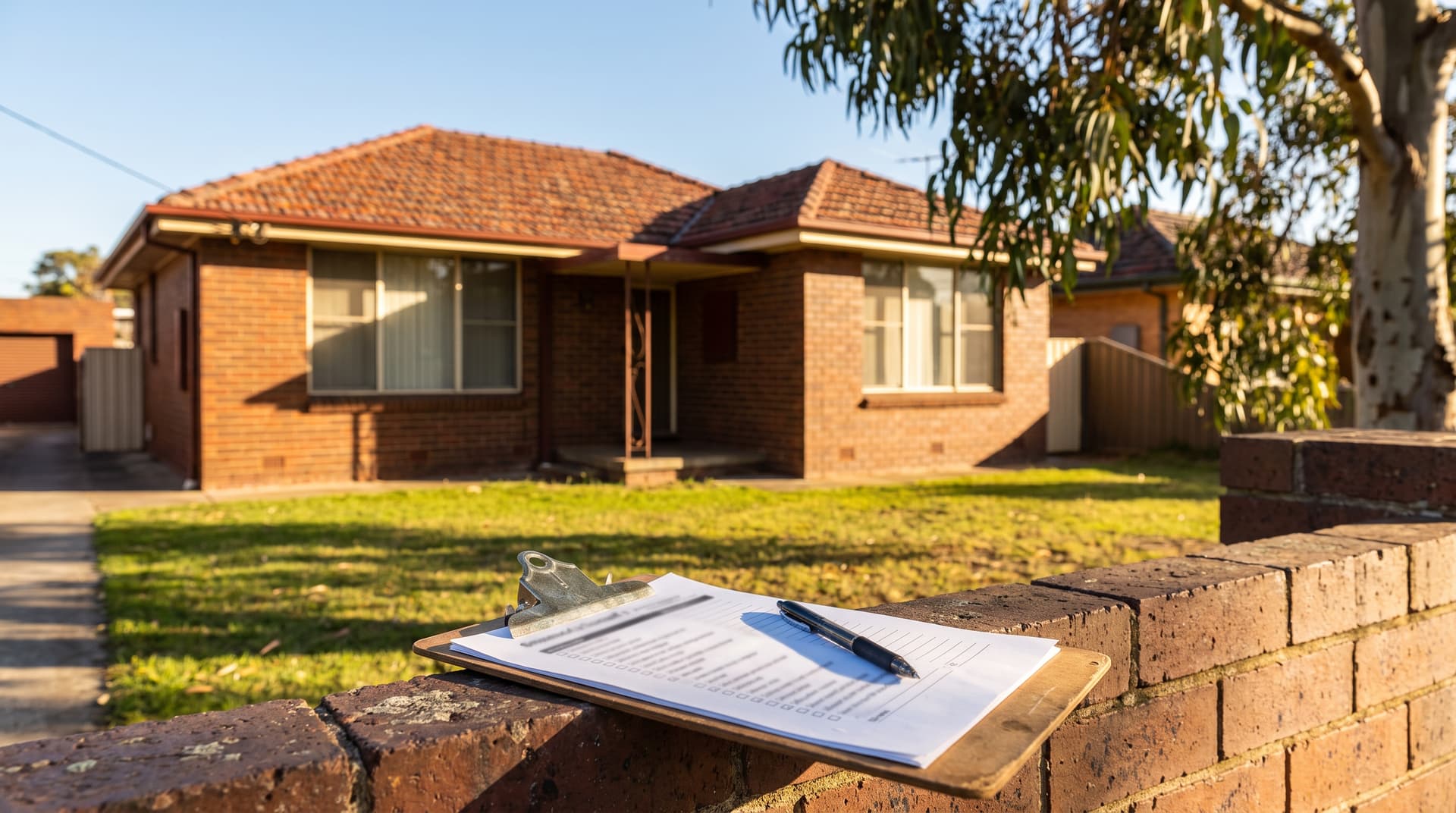
Most property inspection checklists are written for people buying a home to live in. They focus on kitchen finishes, bathroom tiles, and whether the backyard gets afternoon sun. Useful if you are choosing a lifestyle. Less useful if you are buying an asset.
For investors, every defect is a number. A cracked retaining wall is not an inconvenience; it is a repair cost that erodes your rental yield. A missing council approval on a rear extension is not a minor paperwork issue; it is a liability that could force you to demolish the structure. And a property sitting in a flood zone is not just risky during storm season; it changes your insurance premiums for the entire holding period.
The property inspection checklist below is built for that lens. It separates the process into three layers (legal, physical, financial) and sequences them so you spend the least money possible before uncovering the biggest deal-breakers.
Why investors inspect differently from owner-occupiers
An owner-occupier walks through a property asking: could I live here? An investor walks through asking: what will this cost me, and what will it earn?
That distinction matters because 26% of Australian homebuyers faced post-purchase issues they could have avoided with better due diligence. For owner-occupiers, those issues are frustrating. For investors, they directly reduce returns.
A thorough due diligence process covers seven key areas: legal and ownership verification, conveyancing searches, building and structural inspections, strata and body corporate checks, financial and contractual review, environmental and safety checks, and neighbourhood analysis. Most checklists treat these as a flat list. The problem with that approach is sequencing. If you pay $600 for a building inspection and then discover an unregistered easement running through the backyard, you have wasted $600.
The checklist below runs in a specific order: legal first, then physical, then financial. Each layer acts as a gate. If a property fails at the legal stage, you walk away before spending on inspections.
Layer 1: Legal and planning checks (before you walk through the door)
These checks cost the least and uncover the biggest deal-breakers. Run them before you book any inspections.
Title search. A title search through the Land Titles Office confirms the registered owner, type of ownership (sole, joint, company, trust), and any existing mortgages. If the seller does not have clear legal right to sell, nothing else matters.
Easements and covenants. Easements give others certain rights over the property, such as access paths, shared driveways, or drainage lines. Covenants might limit what you can build or alter. Both can devalue the property or derail renovation plans. For investors considering a granny flat addition, easements across the rear of the lot can kill the project entirely.
Council approvals and permits. Your conveyancer should check title deed history, council approvals, building permits, road access, and proposed developments. Pay particular attention to whether existing structures have proper approvals. If they do not, you could end up responsible for fixing or even demolishing non-compliant work. A vendor who added a carport without a permit has handed you a liability, not a feature.
Zoning. Local councils enforce zoning laws that determine how land can be used: residential, mixed-use, commercial, or other. This matters for two reasons. First, it tells you whether you can add value through extensions or granny flats. Second, it tells you what might be built next door. Reviewing zoning details with the local planning department clarifies both the property's potential and its restrictions.
Flood zone and environmental risk. Check whether the area is prone to flooding before you invest in inspections. Council flood maps are free. If the property sits in a flood overlay, that affects insurance costs, tenant demand, and resale value. Better to know now than after exchange.
Layer 2: The physical property inspection checklist
Once the legal checks pass, you walk through the property. The goal is not to decide whether you like it. The goal is to identify every cost you will inherit.
One caution before you start: presentation and building quality are not the same thing. Fresh paint, styling, and recent renovations can hide significant underlying issues. A property that looks clean and modern may still have serious structural defects underneath.
Structural signs
- Cracks. Excessive diagonal cracks in plasterboard throughout the property indicate structural movement. Hairline cracks in isolated spots are common and usually cosmetic. Diagonal cracks appearing in multiple rooms tell a different story.
- Doors and windows. Doors or windows that stick or do not close properly indicate movement. This can be seasonal and normal, but combined with cracking, it suggests the foundation has shifted.
- Floors. Walk every room. Uneven floors, particularly in older homes, point to subsidence or stump deterioration. Both are expensive to fix.
Water and drainage
- External drainage. Water pooling around the property or draining toward the home is a sign that inground drainage may be damaged. Walk the perimeter after rain if possible. Look for standing water near foundations.
- Internal moisture. Skirting boards with bubbling paint or swelling indicate that leaks have been or are still present. Check under sinks, around bathrooms, and along external walls. Active leaks mean ongoing damage.
Roof, gutters, and external
- Inspect the roofline from the street. Sagging ridgelines suggest structural fatigue.
- Check gutters for rust, separation, or overflow staining on fascia boards.
- In cyclone-prone areas (QLD, NT, WA), confirm the roof meets cyclone ratings, as construction must meet stricter standards in those regions.
Safety and compliance
- Smoke alarms. Smoke alarms are legally required in all Australian homes, with placement rules and power source requirements varying by state and build date. Non-compliance means you are liable from settlement day.
- Bushfire rating. If the property is in a bushfire-prone area, check whether windows and doors meet the Bushfire Attack Level (BAL) requirements under Australian building standards. Upgrading to BAL compliance after purchase is costly.
The investor lens on physical defects
Every item above is also a negotiation tool. A building report that identifies $15,000 in deferred maintenance gives you grounds to adjust your offer. When you are valuing an investment property using comparable sales, the condition gap between your target and the comparables is where you find margin.
The professional inspections every investor must order
Your own walkthrough catches surface issues. Professional inspections catch everything underneath.
Building inspection. A qualified inspector works to AS 4349.1, the Australian Standard that defines how pre-purchase building inspections must be conducted. The report covers structural integrity, safety risks, water damage, and maintenance problems not visible during an open home. Building inspections typically cost between $400 and $800 depending on property size and complexity. That is a fraction of what undetected structural damage costs to repair.
Pest inspection. Around 1 in 3 Australian homes are affected by termites at some point, and termites are responsible for more than 80% of structural damage to homes. A pest inspection is not optional. Many providers offer combined building and pest packages. For a full breakdown of what these cost, see our guide to building and pest inspection costs.
Timing matters. Pre-purchase inspections should be ordered before contracts become unconditional. Many buyers organise inspections during the cooling-off period or immediately after an offer is accepted. If you are buying at auction, where there is no cooling-off period, arrange inspections before auction day.
Strata and body corporate: the extra checklist for unit investors
Buying a unit adds an entire layer of due diligence that house buyers skip. The building might be structurally sound, but if the owners corporation is broke, you inherit that problem.
For any strata property, obtain and review the full strata report covering financial health, pending levies, and special assessments. Review meeting minutes from the last two years for disputes or ongoing issues. Check the sinking fund balance to confirm there is enough to cover major repairs. And confirm any upcoming special levies that will become your responsibility on settlement.
A healthy sinking fund means the building has been maintained proactively. A low balance or recent special levy suggests deferred maintenance, which means more levies are coming. That directly affects your holding costs and your yield.
Layer 3: Financial performance checks (the investor-only layer)
Owner-occupiers stop at the building report. Investors have one more layer.
Depreciation schedule. A depreciation schedule prepared by a qualified quantity surveyor allows property investors to claim tax deductions on eligible building components and assets. These deductions can significantly improve after-tax returns. Commission a schedule before settlement so you can start claiming from day one. Our guide to ATO depreciation schedules for rental property covers how this works in detail.
Development potential. The zoning check you ran in Layer 1 has a second purpose here. If the property sits on land zoned for higher density or mixed use, that is embedded upside you can realise through subdivision, a granny flat, or redevelopment. If the zoning restricts you to the existing dwelling, factor that into your growth assumptions.
Tax deduction profile. Interest, depreciation, council rates, insurance, property management fees, and repairs all affect your after-tax position. Map these against expected rental income before you make an offer. Our guide to investment property tax deductions covers the full list of claimable expenses.
The inspection report stack: what to order and in what order
Experienced property buyers rarely rely on a single report. They combine several assessments to form a complete picture of the asset. The sequence below minimises wasted spend by front-loading the cheapest checks with the highest kill rate.
| Order | Check | Approximate cost | What it catches |
|---|---|---|---|
| 1 | Title search and conveyancing | Included in conveyancer fees | Ownership issues, easements, unapproved structures |
| 2 | Zoning and flood overlay check | Free (council website) | Development restrictions, environmental risk |
| 3 | Building and pest inspection | $400 to $800 | Structural defects, termites, water damage, safety |
| 4 | Strata report (units only) | $200 to $400 | Financial health, upcoming levies, disputes |
| 5 | Depreciation schedule | Varies by property | Tax deduction potential, after-tax return improvement |
If a property fails at step 1 or 2, you have spent little or nothing. If it fails at step 3, you are out a few hundred dollars but saved yourself from a far larger mistake. The sequence is the strategy.
Putting your property inspection checklist to work
A property inspection checklist built for investors does more than flag defects. It quantifies risk, identifies hidden costs, and occasionally reveals upside the vendor has not priced in.
Run legal checks first. Walk through second. Model the financials third. Each layer filters out properties that look good on the surface but perform poorly underneath.
If you want help building a research process that catches these issues before you even book an inspection, PropSpotter's coaching program walks you through suburb selection, due diligence, and offer strategy so you buy with confidence, not hope.
FAQ
How much does a building and pest inspection cost in Australia?
Building inspections typically cost between $400 and $800, depending on property size and complexity. Pest inspections are often bundled into the same report. Specialised reports such as property valuations or depreciation schedules cost more.
When should I order a pre-purchase inspection?
Pre-purchase inspections should be ordered before contracts become unconditional. Most buyers arrange them during the cooling-off period or immediately after an offer is accepted. If buying at auction, complete inspections before auction day.
Do I need a strata report before buying a unit?
Yes. A strata report reveals the financial health of the owners corporation, any pending or upcoming special levies, and disputes raised in meeting minutes. A low sinking fund balance is a warning sign that major levies are coming.
What does AS 4349.1 cover?
AS 4349.1 is the Australian Standard that defines how pre-purchase building inspections must be conducted. It outlines the inspection process, reporting requirements, and inspector responsibilities, ensuring consistent and accurate assessments across Australia.